I barely have enough time to breathe let along blog these days, but lucky for me, I am taking some downtime today, so I can come out here and write! Anyway, since I’m so busy, I volunteered to help judge the Azure SQL Championship that you can be part of! This is a great opportunity to level up your skills from onprem to be more cloud-centric and you’re not too late! The competition is from Oct. 12th-30th and there will be new contest challenge each week and daily quizzes that offer you the chance to win badges and prizes, including…
-
-

There’s so much I need to get written down these days, but there’s only so many hours in a day and days in a week and I’ve totally failed in this area. Well, I have a little time right now, so going to try to get something down. It only took me four times to get this published! 🙂 I’m often asked how I migrate an Oracle database to Azure and although each database is unique, there are some things that are pretty consistent that need to be identified and some that should be resolved before migrating to the cloud.…
-
As the flood gates open up on Oracle for Azure IaaS, working in an efficient manner has become a necessity. We’re building out partners to help, but there are ways to empower our customers and those doing this work to make us all successful- hopefully this post will assist. After I posted the Estimate Tool for Sizing Oracle Workloads on Azure, I realized more guidance around AWR reports would be beneficial. These tips will provide help to any migration, not just one to Azure, so read and reap the rewards! Separate and Conquer A sizing estimate isn’t the same thing…
-

A DBA is only as good as their last backup…or more so, their last recovery. To celebrate #WorldBackupDay on Twitter, I’m blogging on how to backup an Oracle database directly to Azure Blob storage. Yes, you could backup on a managed disk directly connected to the VM, then copy it off, but Azure Blob Storage is inexpensive and provides considerable speed and opportunity to create an NSF mount to use the backups with other Oracle hosts for cloning, recovery, etc. Configure Blob Storage in the Azure Portal In this example, we have an Oracle database running on an Azure IaaS…
-
Use the following shell script to create your Oracle VM. I chose the following parameters to create mine: Using Azure Cloud Shell and with persistent storage, which are linked on the github page, I uploaded the mk_oravm.sh script and run it after changing the permissions. chmod 744 mk_oravm.sh Provision the VM Run the script: ./mk_oravm.sh Anwser the questions from the script: What is the name for the resource group to create the deployment in? Example: ORA_GRP Enter your Resource Group name: orabkup_grp Here's the installation version urns available, including Oracle and Oracle Linux Urn ----------------------------------------------------------- Oracle:Oracle-Database-Ee:18.3.0.0:18.3.20181213 Enter the urn you'd…
-
Just like with other UI’s, the Azure portal may not show you the wealth of offerings that can be found in the Azure catalog. For those Oracle DBAs hoping to build an IaaS VM image from a certified OS version, this means they need Oracle Enterprise Linux and are frustrated when they can’t locate it in the portal. Empower with the Cloud Shell Oracle DBAs rarely are fascinated with user interfaces or portals, so when you offer us something like the Azure Cloud Shell, it’s something we should embrace. I’ve spoke about it before and I will rave about it…
-
As often as I use the Automatic Workload Repository(AWR) data in my day-to-day job at Microsoft, I think most can imagine how often I’m explaining its value, along with tracing to my Microsoft peeps. Its time to write a post dedicated to the Microsoft crowd who want to understand a bit more about AWR, so hopefully its helpful! What is the Automatic Workload Repository? The Automatic Workload Repository, (AWR) had been around since Oracle 10g and requires the diagnostic and tuning management pack licensing to use all of its features in Oracle’s Enterprise Edition database. Versions before 10.2.0.4 had limited…
-
Some folks stated they were having trouble finding this, so I’m posting a link here for the blog I wrote on the Microsoft Tech Community Blog on my opinion about building out RAC on Azure.
-
Load testing as part of a cloud migration project is expected and should be built into the requirements. The goal is to set yourself up for success. Log Latency Recently I had a Cloud Solution Architect, (CSA) escalate an Oracle performance problem after migrating from on-prem to the cloud. The information provided from the customer stated they were experiencing log sync latency in Oracle and that they hadn’t experienced this previously on-prem. They said there weren’t really any changes, just a simple lift and shift to Azure, so they were at a loss as to why the latency was being…
-
In my last post, I discussed some of the unique challenges migrating Oracle workloads from Exadata to Azure posed. Engineered systems are not your everyday lift and shift and are rarely simple. Although I covered some focus areas for success, I’d like to get into the migration philosophical questions around cell offloading and IO. cell information is referred to in the average Oracle 12c AWR report almost 350 times. That’s a LOT of data to consider when migrating a workload to a server that won’t have cell nodes to OFFLOAD TO. If cell nodes are creating a ton of different…
-
I know, I know- there’s a number of you out there thinking- I’m being brought in on more and more of these projects due to a recent change for some Exadata backup components many companies kept onsite, (parts that wear out more often, like PDUs and cell disks) which are no longer an option and that moving to Azure is a viable option for these workloads if you know what to identify and address before the move to the cloud. Engineered, Not Iron An Exadata is an engineered system- database nodes, secondary cell nodes, (also referred to as storage nodes/cell…
-

We’ll start with a disclaimer here- this is my experience and my opinion. NO ONE ELSE’S, just as any link to any blog in this post is. Take it or leave it, I really don’t care, never have, never will- never been one to follow any drummer but my own anyway. 😊 Although the basis for calculating database management systems percentage of business is highly contested, there isn’t anyone contesting Oracle as having the largest percentage of the current database management system business. Don’t confuse this with cloud business or other technology platform- those are two different things. One such…
-
I’ve been studying for over a week for my certs. It really is a challenge for my ADHD brain, as I learn by interacting and using a product, not be reading about it and guess what? Most of what the certs are on are not in my technical area. Yeah, this is not fun for me. I find that my brain hits a limit on what it can absorb before the activity levels in the temporal lobes diminish and I need to take a break, which is what I’m doing right now after a full day of Azure Synapse Analytics,…
-
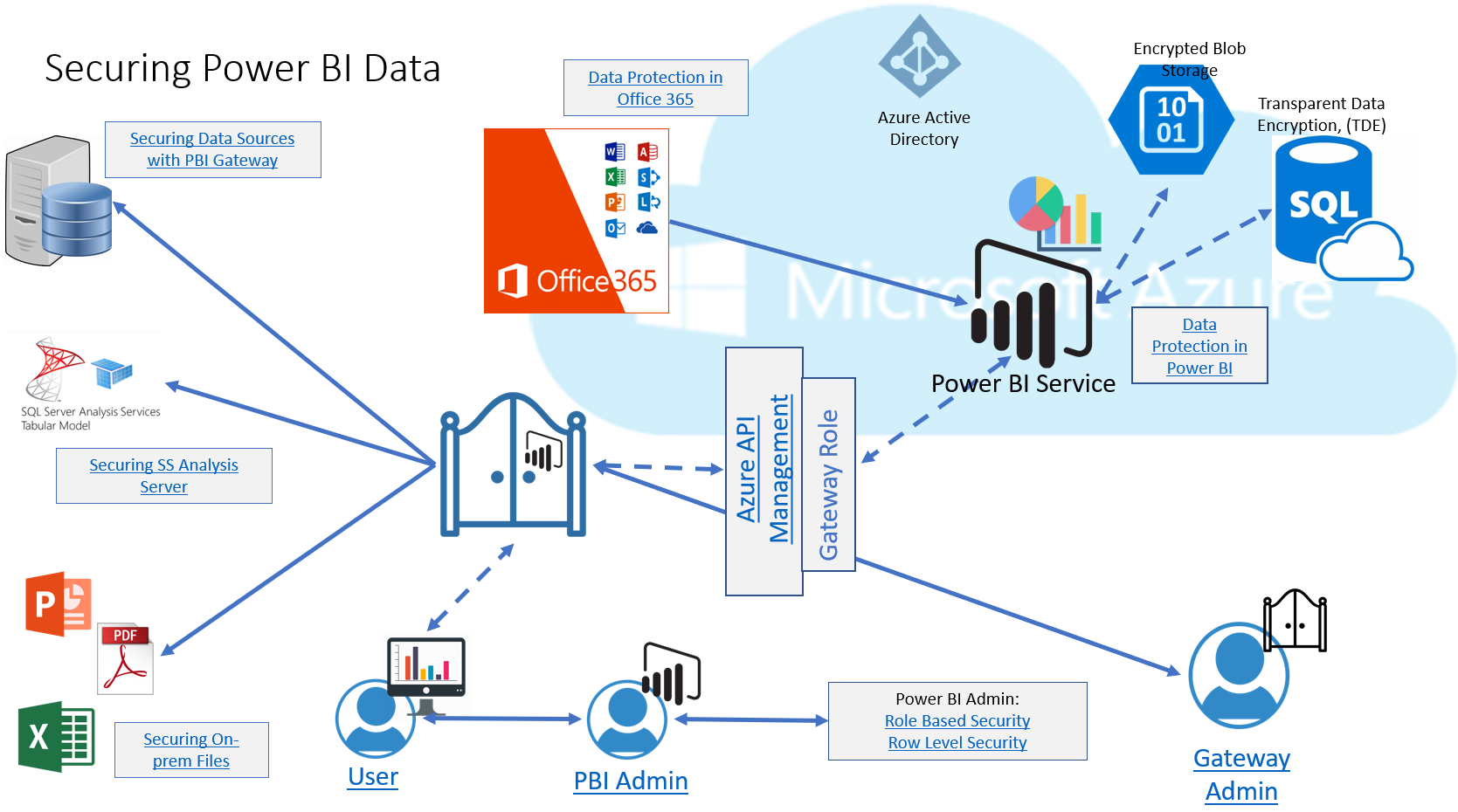
I haven’t been very good at sharing my analytics work as often I feel others are more skilled in this area than I am, just starting out, but today I’d like to start to fix that by sharing an interactive diagram. I know, some of you may be saying, “infographic”, but as it’s has links vs. a paginated design, I’ll call it as I see it. Not the Kitchen Sink This diagram I built for a customer who was interested in how data was secured at different stages of the Power BI environment and was built with their specific Power…
-
I’m getting ready for SQL Saturday Oregon this weekend, (taking the train up from Eugene to Portland…) but its about time I talked about the exhilarating and exhausting event we call PASS Summit. This year I was lucky enough to be chosen as a speaker and a blogger. Bloggers at the conference get the opportunity to sit in special zones during keynotes and we write about the event. We also get special access to Microsoft PMs, (although I may be the only one who works for Microsoft attending vs. running them… :)) I look forward to all of the blogger…
-

No matter how far my career and role has shifted, I will always view myself as a database administrator. I know this because when I fill out any form asking me what role I fulfill in IT, I still choose “DBA” from the list. No matter what claims the media and leading sources state, DBAs are an important role, even as technology shifts and traditional database tasks move to the cloud. Deeper relational database skills are still quite relevant when working in complex technical scenarios. The Experts Companies work to ensure they hire the right technical specialists. They don’t understand database…
-
I enjoyed the opportunity to test out my PASS Summit shell scripting session at SQL Saturday Denver. It was the first run on it and Glenn Berry sat in my session. Afterwards, this wise and long-standing member of the community had a very valuable piece of constructive criticism- change the background on my bash terminal for Azure Cloud Shell, as the black background and colors could be troublesome for some attendees. I agree with him- you never know what the projector quality will be, the lighting in the room, color-blind attendees or other factors that could impact the readability of …
-
I’ve been very busy allocating 60% of my time towards Oracle on Azure migrations. The biggest challenge right now isn’t getting Oracle on Azure, but keeping my percentage of time allocated to only 60%. I love Oracle technology- yes, a Microsoft employee who LOVES Microsoft and Azure cloud, also LOVES. Oracle. I won’t apologize and I know I’m not the only one. Every company I’ve worked for, even when I worked at Oracle, required my multi-platform skill set. I’ve never worked anywhere that had ONLY Oracle, only Linux, only Microsoft, only SQL Server, etc. I saw it only as…